
The past five years have reshaped the commercial real estate landscape. Once fueled by a decade of near-zero interest rates, the market is now defined by higher borrowing costs, tighter credit, and a pullback from traditional lenders. These shifts have created a structural gap in the capital stack and a compelling opportunity for investors: preferred equity.
In week 1 we explained how preferred equity occupies the middle ground between senior debt and common equity. It delivers investors strong, risk-adjusted returns with downside protection and priority of payment over common equity owners, while providing developers and real estate operators with critical capital to move projects forward.
Understanding the Market Shift
Over the last four years, we’ve witnessed one of the most dramatic reversals in modern real estate history.
2020–2022: Expansion and Euphoria
- Real estate valuations surged more than 20% amid aggressive underwriting and frothy capital markets.
- Borrowing rates were at historic lows, fueling speculative development and high leverage.
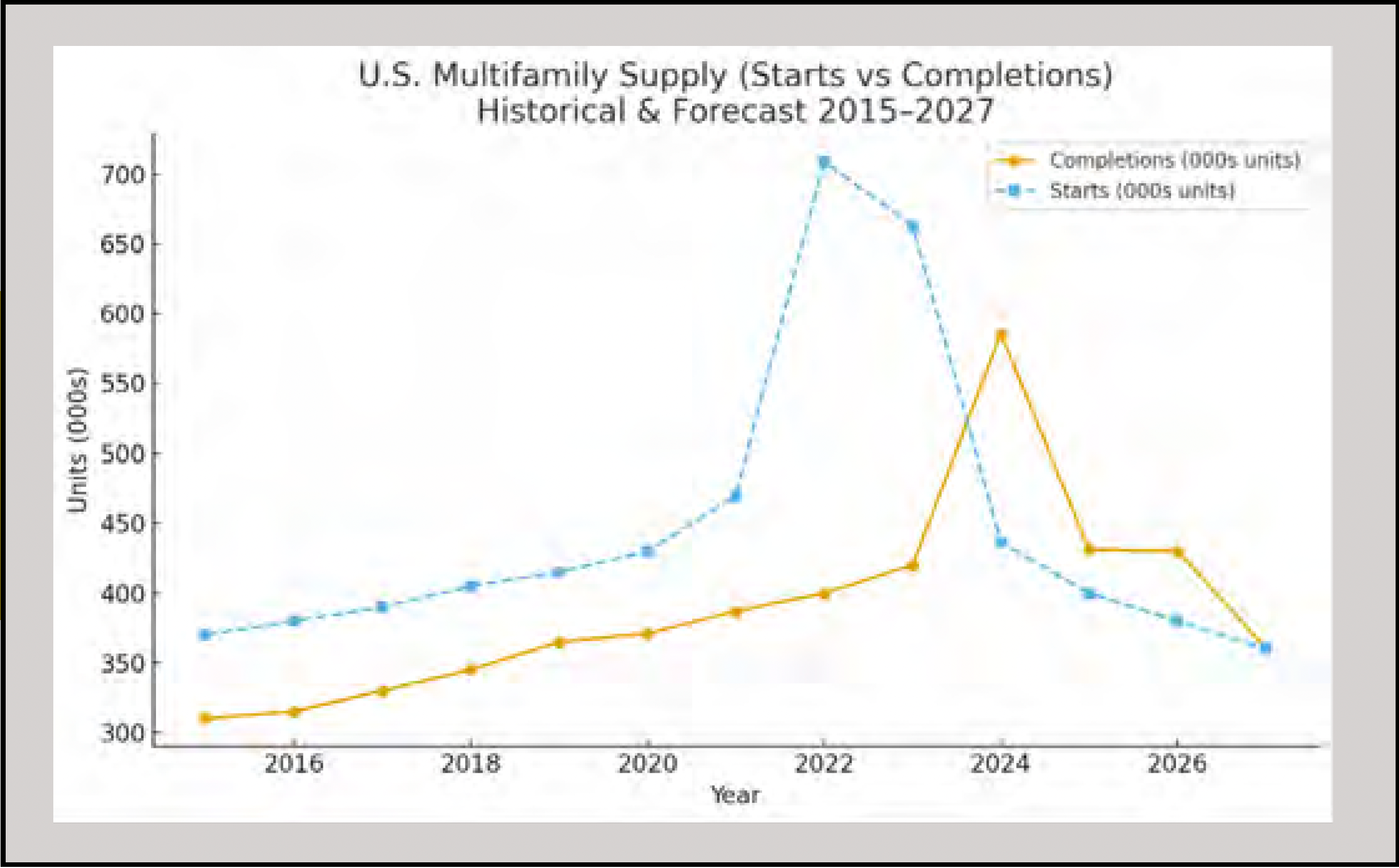
- Multifamily starts and completions soared, flooding markets with excess new supply.
2023–2025: Contraction and Correction
- Rising interest rates (up more than 400 basis points since 2021) froze capital markets.
- Valuations declined to pre-pandemic levels, erasing years of artificial appreciation.
- Stricter federal regulations and higher bank capital requirements dramatically reduced lending activity.
- Loan extensions and “extend-and-pretend” rollovers replaced and outpaced new originations.
- Multifamily starts fell to their lowest level in a decade, creating a future supply shortage.
These charts tell the story:
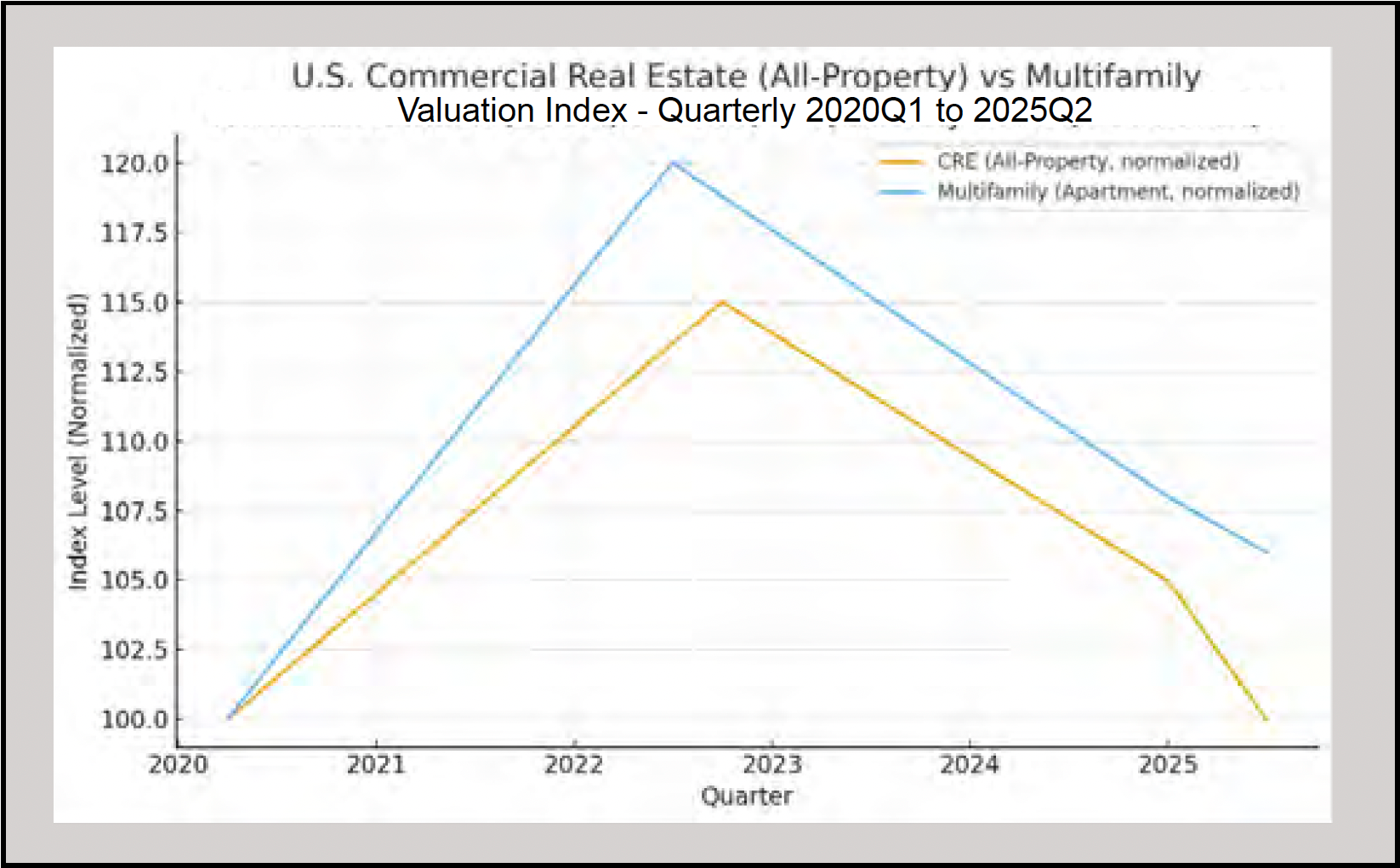
- Valuations have normalized across commercial property sectors, with multifamily values retracting much of their pandemic-era gains.
- New construction starts have collapsed, while completions are tapering off, setting the stage for a more balanced, supply-constrained environment in the coming years.
- Credit spreads have widened, and preferred equity coupons have remained meaningfully higher than Treasury yields, with Armada’s average deal-level coupon exceeding the 3-Year Treasury by more than 1,200 basis points.
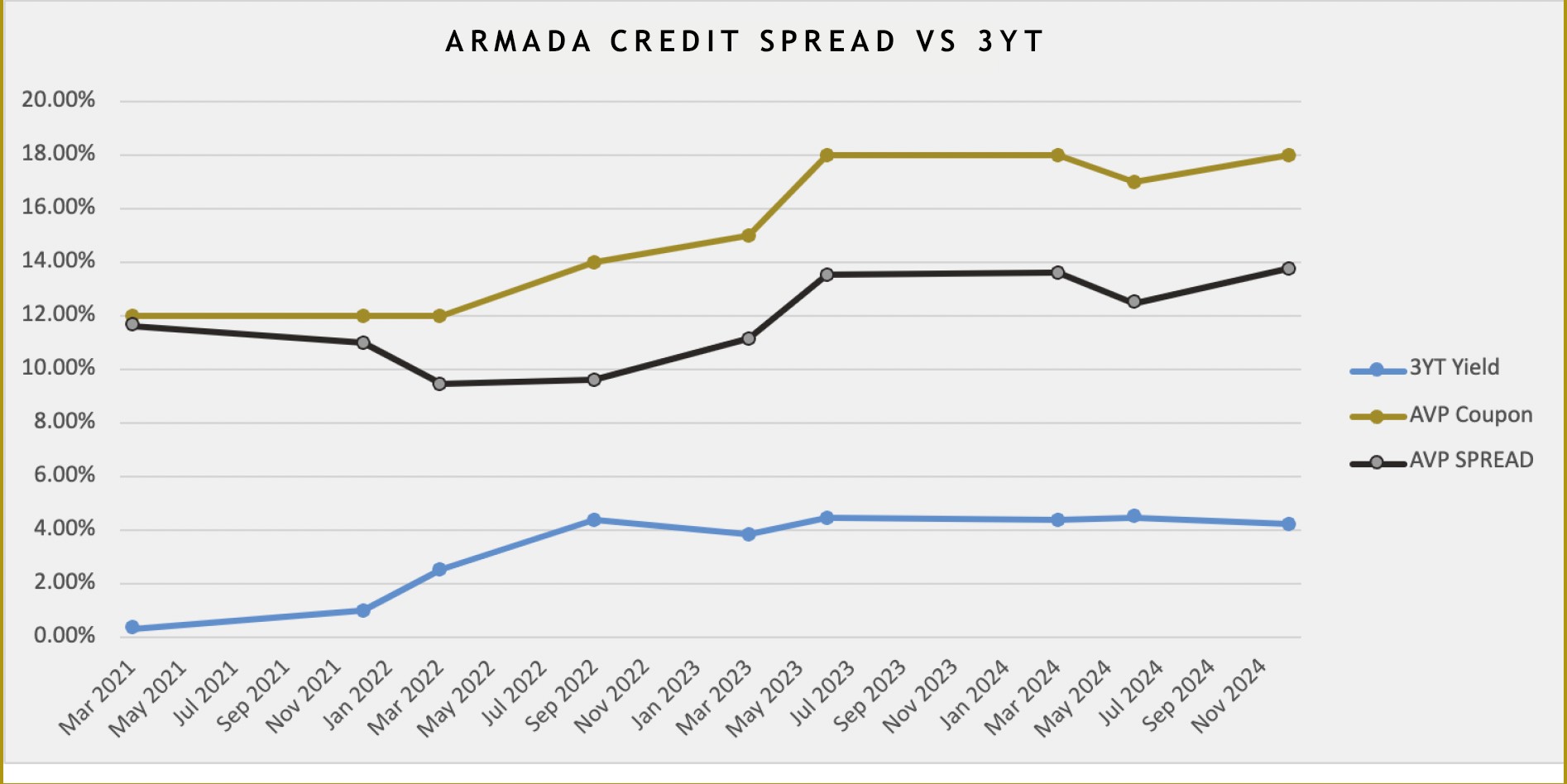
Our investments are structured with a 3-year maximum term,therefore we are comparing to the 3-Year Treasury Rates.
Over the course of structuring preferred equity investments, AVP deal-level coupons havemaintained an average of 12.45% HIGHER than the prevailing 3-Year Treasury Rate.
How Armada Is Positioning Within This Environment
At Armada, we anticipated these structural changes early. We recognized that the tightening credit environment would create both challenges for developers and opportunities for disciplined capital providers.
Over the past four years, we’ve strategically pivoted from directly developing and owning real estate to focusing exclusively on preferred equity investments, a position that allows us to provide flexible, non-dilutive capital while protecting our investors’ capital through significant downside protection.
Preferred equity enables Armada to step into deals where strong sponsors face a temporary capital shortfall, whether to refinance, start/complete construction, or stabilize an asset, while maintaining control and creating alignment between all parties. It’s a strategy designed to thrive in the current market cycle, where disciplined underwriting and structured capital are in high demand.
What It Means for Investors Today
We’re investing at a time when real estate valuations have already reset, allowing us to deploy capital at a discount while structuring significant downside protection over the term of the investment.
This positions our development and real estate operating partners to deliver new and value-add projects into healthier, supply-constrained markets, as demand outpaces new construction and the lending environment continues to stabilize.
For our investors, this creates one of the most compelling risk-adjusted return profiles available in commercial real estate today:
- Priority of payment/distributions over common equity.
- Strong, contractual yield.
- Built-in capital protection through conservative underwriting and structural safeguards.
- Tax benefits that include long term capital gains treatment and standard/bonus pass through depreciation.
In a period defined by uncertainty, preferred equity provides both security and opportunity, allowing investors to participate in real estate’s recovery from a position of strength.
Next week: we’ll break down why preferred equity is an advantageous capital solution for real estate owners.